
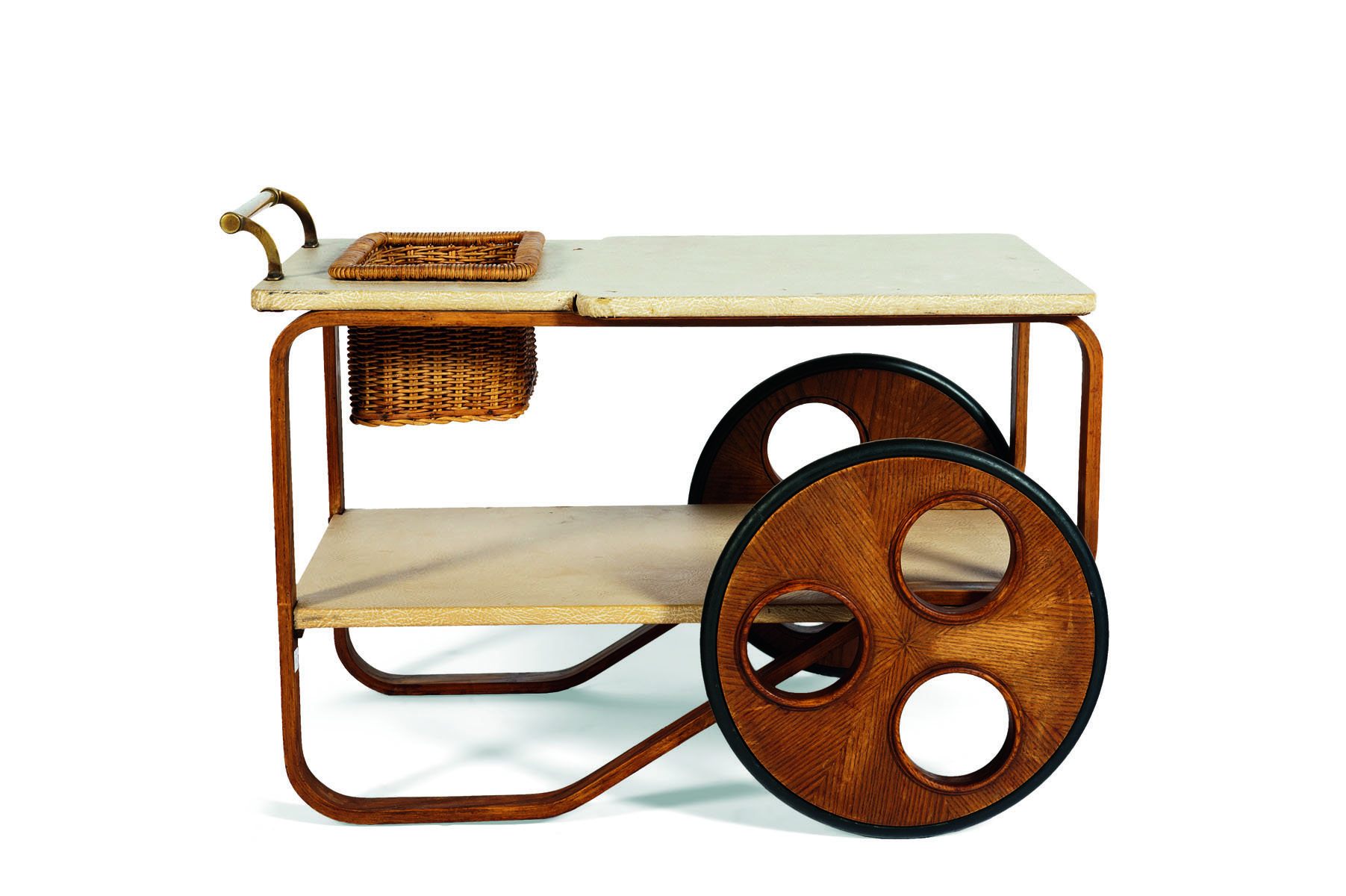
Dans l’Europe des années 1930, le modernisme s’impose avec une rigueur presque militaire. Acier, verre, lignes droites, fonctionnalité stricte. Alvar Aalto, lui, emprunte une autre voie. Il ne rejette pas la modernité, mais refuse qu’elle devienne inhumaine. Son obsession n’est pas la forme parfaite, mais la manière dont un corps habite l’espace.
Soigner par le design : l’anecdote du sanatorium
L’un des épisodes les plus révélateurs de sa démarche reste le sanatorium de Paimio (1932). Aalto y conçoit tout : le bâtiment, les couleurs, l’acoustique… et même la position des lits, orientés pour que les patients tuberculeux voient le ciel sans effort.
La célèbre chaise Paimio n’est pas pensée comme un objet esthétique, mais comme un instrument médical : son inclinaison facilite la respiration. Aalto dira plus tard que « le design doit être un outil de guérison ».
Le bois contre la machine
Alors que nombre de ses contemporains glorifient l’acier, Aalto choisit le bois. Non par nostalgie, mais par conviction. Le bois absorbe le son, vieillit avec dignité, dialogue avec la lumière nordique.
Ses recherches sur le bois lamellé-collé courbé donnent naissance à des formes inédites : le tabouret 60 (1933), empilable, stable, presque archétypal, devient un compagnon du quotidien finlandais — écoles, bibliothèques, cafés, maisons.
Anecdote souvent racontée : dans les ateliers, Aalto expérimentait en faisant plier le bois à la vapeur comme on aurait plié un matériau vivant, acceptant parfois les fissures comme partie du processus.
Le vase Savoy : une forme sans dessin
En 1936, pour un restaurant d’Helsinki, Aalto dessine le vase Savoy. Ou plutôt… il ne le dessine pas vraiment. Les archives racontent qu’il aurait esquissé la forme librement, presque machinalement, inspiré par les lacs finlandais.
Résultat : un objet sans angle, sans symétrie évidente, impossible à réduire à un style. Encore aujourd’hui, personne ne s’accorde sur son origine exacte — et c’est précisément ce qui en fait une icône.
Artek : démocratiser sans appauvrir
En 1935, Aalto cofonde Artek avec sa femme Aino Aalto et des intellectuels finlandais. Le nom mêle art et technologie. Le manifeste est clair : produire des objets modernes, durables, accessibles, sans renoncer à l’intelligence formelle. Artek n’est pas une marque de luxe, mais une plateforme culturelle.
Aujourd’hui encore, ses meubles sont utilisés dans des lieux publics, des écoles, des musées — preuve que la modernité d’Aalto n’a jamais été décorative.
Un héritage toujours vivant
Des expositions, comme celles présentées à Millesgården en Suède, rappellent combien Aalto reste actuel. À l’heure où l’on parle de bien-être, de durabilité, d’architecture sensible, son œuvre apparaît presque prophétique.
Aalto n’a pas cherché à imposer une signature. Il a préféré poser une question simple, mais essentielle : Comment voulons-nous vivre ?
Et c’est peut-être pour cela que, près d’un siècle plus tard, ses meubles ne semblent jamais appartenir au passé.
Références de travail (non exhaustives)
- Artek archives & publications historiques.
- "Aino + Alvar Aalto, une vie ensemble", Heikki Aalto-Alanen, Phaidon France. 2023.
- "Alvar Aalto - de l’oeuvre aux écrits", Textes. Centre Georges Pompidou-Ircam. 1993.
- Millesgården Museum, Stockholm – Exposition design scandinave.
- Historiographie du design nordique (années 1930–1950). Scandinavia Design – dossiers pédagogiques.